

Key Takeaways
- Astigmatism happens when the cornea (the outer layer of the eye) or lens has an uneven shape, which can blur vision at every distance.
- Squinting, head-tilting, eye rubbing, and homework headaches can sometimes point to a vision problem.
- The condition often runs in families and may appear at birth.
- Mild cases in babies sometimes clear on their own, while larger amounts usually need correction.
- An eye doctor in Scottsdale can diagnose astigmatism with gentle testing and help with glasses or contacts.
If you’ve watched your child squint at the television or tilt their head to read a book, you may wonder what is going on with their vision. Small habits like these can be early clues of astigmatism, a common vision problem that can affect how clearly your child sees the world. At Eye Lab, our team can help families recognize the signs and guide the next steps.
If you think your child may have astigmatism, it’s important to bring them in for a children’s eye exam so our care team can point your family towards your next steps.
What Astigmatism Means for Your Child’s Vision
Imagine a basketball. It’s round and even on every side. A normal cornea, the clear front layer of the eye, should have a similar shape. But with astigmatism, the cornea looks more like a football, curved more in one direction than the other.
That uneven curve can prevent light from focusing in a single spot on the back of the eye, which can make vision blurry at every distance. So your child might have trouble seeing up close, across the room, and everywhere in between. Astigmatism can show up in 1 eye or both, and the amount can be different from side to side.
Signs Your Child May Have Astigmatism
Kids don’t always know that their vision is blurry because they think everyone sees the world the way they do. That’s why parents often spot the small habits first. If you notice your child doing any of the following signs, it may be a good idea to book them in for an eye exam:
- Squinting or tilting the head to bring things into focus
- Rubbing their eyes often, even when your child isn’t sleepy
- Frequent headaches after reading or finishing homework
Clues at School and Play
The classroom and the backyard can reveal a lot. Your child might complain that the board looks smudged or ask to sit closer to see it.

Some children with astigmatism may notice glare, halos, or visual distortion around lights, particularly when their astigmatism is uncorrected.
Why Astigmatism Happens in Kids
Astigmatism often runs in families. If you or your partner wear glasses for it, your child has a higher chance of having it too.
Most kids are simply born with the corneal shape they have, and that shape can shift a little as they grow. Astigmatism also shows up more often alongside lazy eye, and babies born early can be more likely to have it.
Will Your Child Outgrow Astigmatism?
Sometimes, children can outgrow astigmatism. Some babies have a mild amount that fades on its own during the first few years of life.
Astigmatism can change as the eyes develop, particularly during early childhood. If it persists or is more significant, your eye doctor can monitor it and determine whether correction is needed. Regular eye exams help the doctor track any changes over time.
How an Eye Doctor Diagnoses and Treats Astigmatism
A short visit to your eye doctor in Scottsdale can help you understand what may be happening with your child’s vision. Our team can check how your child’s eyes focus and, if needed, suggest glasses or contacts that fit their life.
What Happens at the Exam
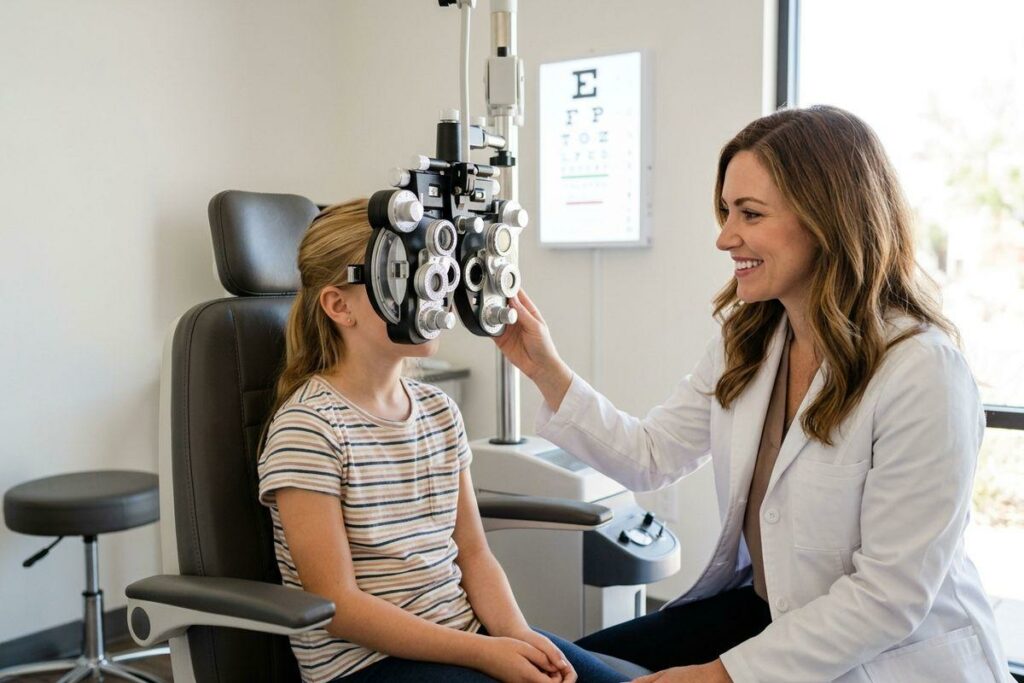
At Eye Lab, we prioritize a comfortable, gentle experience, especially for kids. The eye doctor uses lights, lenses, and picture charts to measure how each eye focuses, and your child doesn’t need to read to take part.
A first exam between 6 and 12 months of age can give the eye doctor an early baseline. From there, annual eye exams through the school years help catch shifts before they slow your child down.
Treatment Options for Clearer Sight
Glasses are usually the first step. Lightweight frames with the right lenses can sharpen vision right away and feel comfortable for all-day wear.
Older kids who want more freedom may do well with toric contact lenses, which are shaped to match an astigmatic eye. If a lazy eye is also present, the eye doctor may recommend extra care, such as patching, to help both eyes work together.
Schedule Your Family’s Visit
At Eye Lab, our team pairs thorough exams with a relaxed, welcoming space where your family can settle in, browse the eyewear boutique, and even say hello to Simba, our cat. If your child shows any of these signs, or you’re simply due for a visit, we’d love to see you. Book your appointment today.