
Key Takeaways
- Contact lens and glasses prescriptions are not the same and should not be used interchangeably.
- Contacts use extra measurements, including base curve and diameter, to fit your eye correctly.
- A separate contact lens fitting exam is a good idea, even if you already have a prescription for glasses.
- Many people keep both contacts and glasses on hand for different situations.
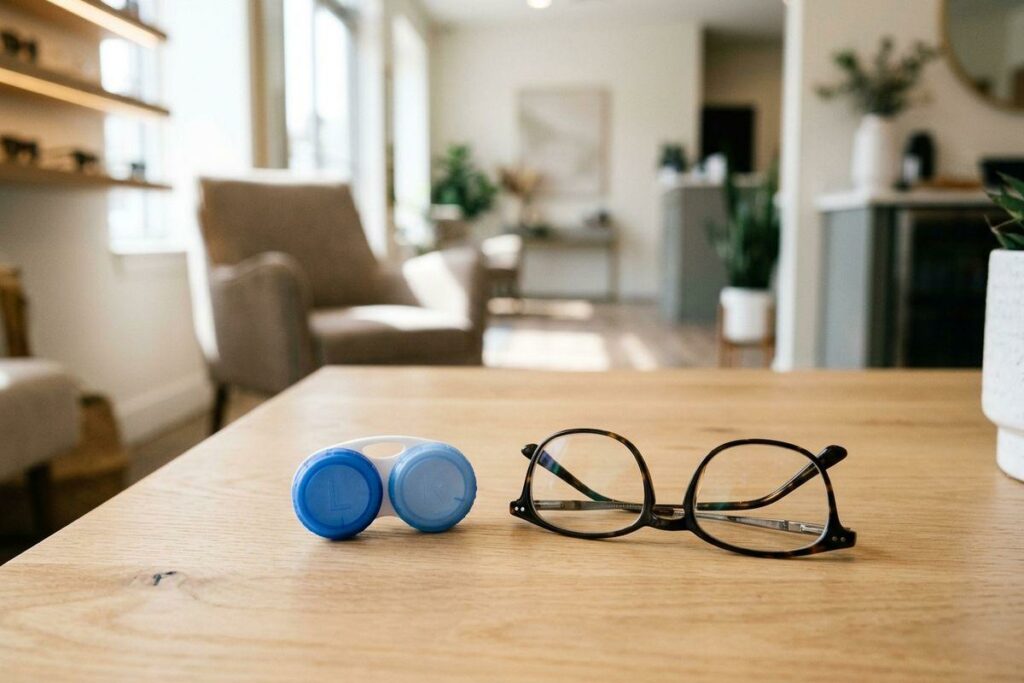
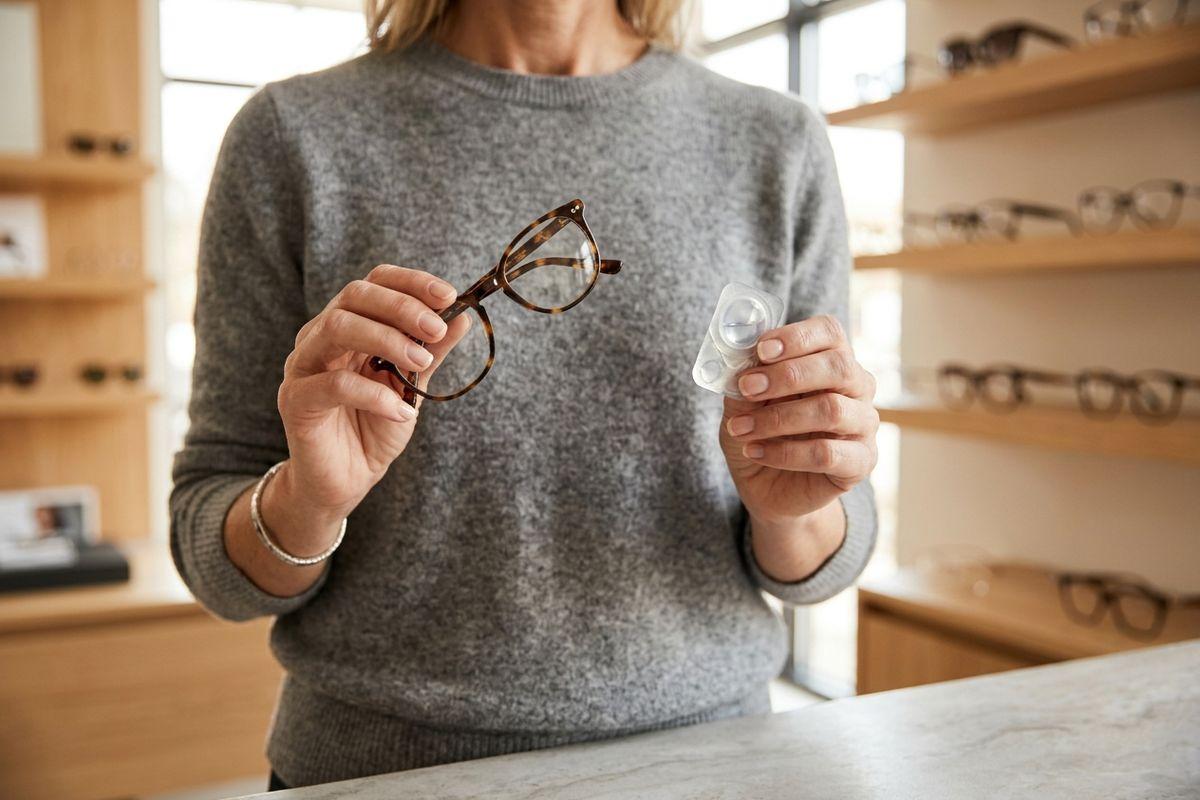
Maybe you’ve been wanting to order contact lenses online, and thought you could just use your glasses prescription to do it. At Eye Lab, we know this may seem like it makes sense at first glance, but we want you to understand why contact lens prescriptions and glasses prescriptions aren’t the same thing.
It’s not a good idea to use your glasses prescription to buy contact lenses, or the other way around. Our team offers thorough contact lens fittings so you leave with the right prescription for your needs.
A Brief Overview of the Differences
Glasses sit a distance of about 12 millimeters away from your eyes. On the other hand, contacts sit directly on the surface of your eye. That gap might not sound like much, but it can change how light bends and focuses, which may mean the prescription numbers need to be adjusted, particularly for stronger prescriptions.
Even if your prescription is mild, the differences between them can be noticeable. Contacts also need to match the physical shape of your eye in ways that glasses never have to. That’s where the extra measurements come in.
What Makes a Contact Lens Prescription Different
Extra Measurements Contacts Require
A glasses prescription only needs to correct how you see, but a contact lens prescription has to do that and fit your eye. To get that right, an eye doctor evaluates the shape of your cornea (the clear outer layer of your eye) so the lens sits comfortably without sliding or pressing too hard.
The diameter of the lens also matters. It determines how much of your eye the lens covers and how it stays in place throughout the day. On top of that, the lens brand and material affect breathability and comfort, so the prescription often specifies a particular lens brand rather than leaving it open-ended.
How Long Each Prescription Lasts
Contact lens prescriptions are often valid for 1 year, while glasses prescriptions may remain valid longer depending on state regulations and your eye doctor’s recommendations.
Can You Convert a Glasses Prescription to Contacts?
There isn’t a reliable, straightforward way to convert a glasses prescription to a contact lens prescription at home. The numbers are not simply adjusted by a fixed amount. That’s why we always recommend a contact lens fitting exam, no matter how strong or mild your prescription may be.
Online conversion tools may seem convenient, but they are not a reliable substitute for an in-person exam. A proper fitting checks how the lens moves on your eye, how your eye responds to the material, and whether the fit feels right over time. Those are things no calculator can measure for you.
But once your prescription is confirmed, you can order contacts online through our website.
Reading Your Prescription: What Those Numbers Mean
Common Abbreviations on Both Prescriptions
Both prescriptions share a few common abbreviations. Once you know what they mean, the page can start to make more sense. You might see:
- Sphere (SPH): The lens power that corrects nearsightedness or farsightedness.
- Cylinder (CYL) and axis: These are values used to correct astigmatism.
- OD/OS: Shorthand for your right eye (OD) and left eye (OS).
Contact-Only Terms to Know
Your contact lens prescription may also include a couple of measurements you won’t find on a glasses prescription. These are specific to how the lens fits your eye. This can include:
- Base curve (BC): This matches the curvature of your cornea.
- Diameter (DIA): This refers to the overall size of the lens.
Contacts vs. Glasses: Choosing What Works for You
Reasons to Choose Contacts
Contacts tend to work well for an active lifestyle. They stay in place during sports or exercise, and you don’t have to worry about them fogging up in cold weather or sliding down your nose mid-run. Some people also find that contact lenses feel more natural throughout the day, especially once they’ve adjusted to wearing them.
Reasons to Choose Glasses
Glasses are low-maintenance and easy to put on and take off. They also act as a bit of a shield against dust, wind, and airborne debris, which can provide some comfort on high-pollen days or in dry climates. For busy mornings, they’re simply the faster option.
We have a wide range of styles for everyone, so if you’ve been looking for a new pair, we encourage you to come try some on.
Wearing Both
A lot of people keep both contacts and glasses on hand and switch between them depending on the day. You may prefer contact lenses for sports, travel, or social activities, while glasses can provide added convenience during long hours at the computer or while relaxing at home. An eye doctor in Scottsdale can help you figure out what combination fits your lifestyle and your prescription needs.
Book Your Appointment
Our team at Eye Lab takes the time to walk you through your options. Whether you’re exploring contacts for the first time or updating an existing prescription, schedule a visit and see what a thorough, comfortable appointment can look like.